去年聖誕節一個陰沉的早晨,一枚搭載著有史以來最強大的太空望遠鏡的火箭從法屬圭亞那的發射台升空。大約一個月後,詹姆斯韋伯太空望遠鏡(JWST)抵達太空目的地,開始向人類傳回閃亮的禮物——令人嘆為觀止的圖像,以全新的方式揭示著我們的宇宙。
自1988年以來, 《大眾科學》每年都會聚焦在那些讓地球生活哪怕只變得更美好的創新。今年——也是我們評選的第35年——格外引人注目,這要歸功於詹姆斯·韋伯太空望遠鏡(JWST)的成功部署,它榮獲了我們最高榮譽——年度創新獎。但這只是我們編輯精心挑選的100項傑出科技成就之一。
以下列表凝聚了數月的研究、測試、討論和辯論成果。它讚頌了那些正在從各個方面改善我們生活的激動人心的發明。這些技術和發現不僅讓我們了解宇宙的本質、治療疾病,也為我們提供了更好的娛樂和表達方式。
這份榜單涵蓋了從航空航太到運動戶外等十大類別,可謂琳瑯滿目。大螢幕上的海軍戰鬥機和手機上的TikTok濾鏡應有盡有。既有助你探索戶外美景的裝備,也有改善健康和居家環境的設備。我們囊括了各種各樣的電子產品、一座超長的懸索橋,以及續航里程達747英里的電動車。繫好安全帶,一起來看看下面的得獎名單吧!
- 航太
- 工程
- 小工具
- 健康
- 娛樂
- 個人護理
- 緊急服務和國防
- 汽車
- 運動與戶外
- 家
航太

在太空中,沒有人能聽到探測器撞擊小行星的聲音——但今年9月,NASA的DART實驗成功證明了透過人為撞擊改變太空岩石的軌道是可行的。而這甚至還不是今年太空領域最重要的事件——稍後會詳細介紹詹姆斯韋伯太空望遠鏡(JWST)。回到地球,航空業的創新也達到了新的高度,一架獨特的電動飛機成功首飛,一架能夠自動駕駛的黑鷹直升機也成功首飛。
年度創新獎
美國太空總署的詹姆斯韋伯太空望遠鏡:一款改變宇宙觀測格局的新型儀器
每隔一代人,就會出現一款超越以往所有天文工具的傑作。美國太空總署的詹姆斯韋伯太空望遠鏡(JWST)正是這樣一款傑作。經過二十餘年和97億美元的研發,JWST於2021年12月25日發射升空。自今年2月首次開始成像以來——其主鏡和孔徑半徑幾乎是前代哈伯太空望遠鏡的三倍——JWST拍攝的絢麗影像吸引了全世界的目光。
詹姆斯韋伯太空望遠鏡(JWST)能夠深入觀測正在形成的恆星區域。它可以回溯130億年前,窺探仍在孕育中的古老星系。它可以觀測系外行星,直接捕捉到它們的身影,而天文學家過去只能依靠微弱的線索來推斷它們的存在。它可以告訴我們這些恆星和星係是如何從原始物質中誕生的,而哈伯望遠鏡只能對此進行驚鴻一瞥。
當哈伯望遠鏡在近地軌道上繞地球運行時,詹姆斯韋伯太空望遠鏡(JWST)則位於數十萬英里外的地球陰影中,永遠無法沐浴陽光。在那裡,它被比指甲還薄的多層遮陽罩進一步保護,溫度低至華氏零下370度(約攝氏零下270度),這是JWST紅外線觀測的最佳溫度。它的「家園」位於一個名為L2的奇特地點,L2是太陽和地球引力相互平衡的幾個點之一。
這一切或許只是詹姆斯韋伯太空望遠鏡(JWST)的序幕。由於這台望遠鏡在抵達預定位置時消耗的燃料比最初預期的要少,因此它的剩餘燃料可能足以支撐其運行超過預期的十年。我們迫不及待地想看看它還會給我們帶來哪些驚喜。
Delta 的平行現實技術:為您量身定制的螢幕
你可能曾經在機場奔跑,瞇著眼睛盯著螢幕上密密麻麻的航班資訊。達美航空和一家名為 Misapplied Sciences 的新創公司推出了一項未來感十足的新技術,旨在改變這種現狀。在底特律都會機場,一套系統可以提供旅客個人化的航班資訊。在麥克納馬拉航站樓掃描登機證是識別你身份的一種方式。之後,當你抬頭看向頭頂的螢幕時,你會發現螢幕上只顯示與你的行程相關的個人化數據,例如你需要前往哪個登機口。該系統的工作原理是,顯示器上的像素可以向 18,000 個不同的方向發光,這意味著許多人可以同時查看同一螢幕,並看到不同的資訊。
阿拉斯加航空電子行李標籤:您需要的最後一個行李標籤(適用於一家航空公司)
信不信由你,有些旅客仍然會托運行李,而這家總部位於西雅圖的航空公司推出的一項新服務旨在簡化這一流程。阿拉斯加航空的電子行李標籤(最初將優先提供給其常旅客計畫的2500名會員,2023年將面向公眾發售)可讓旅客在家中使用手機,在電子標籤的電子墨水屏上創建相應的行李標籤,最快可在航班起飛前24小時完成。這款5吋長的標籤透過NFC連接從手機獲取電力,從而在螢幕上產生資訊。旅客在家中完成此步驟後,只需將貼好標籤的行李送到機場指定地點即可,無需排隊領取紙本標籤。
Alice by Eviation:一架全電動通勤飛機
航空業是碳排放的主要來源之一。解決此問題的方法之一是使用電力驅動飛機,僅用於短途飛行。 Eviation公司正致力於研發一款名為「愛麗絲」(Alice)的飛機:這架通勤飛機的機腹裝有8,000磅重的電池,為兩台引擎提供飛行所需的動力。事實上,它已於9月完成了首飛,雖然飛行時間短暫,但十分成功。隨著電池技術的進步,該公司希望未來能讓這架飛機搭載9名乘客飛行約200英里。
西科斯基公司生產的OPV黑鷹:一架可自主飛行的軍用直升機
陸軍的黑鷹直升機通常由兩名飛行員駕駛,但如果執行特別危險的任務時,飛行員人數可以降至零?這正是經過改裝的UH-60直升機所能做到的,它是美國國防高級研究計畫局(DARPA)名為ALIAS(機組人員駕駛艙自動化系統)計畫的成果。這架無人駕駛直升機於今年2月完成了首次無人飛行,並在10月再次升空,甚至還攜帶了2600磅的負荷。這項技術來自直升機製造商西科斯基公司,它允許改裝後的UH-60由兩名飛行員、一名飛行員或零名飛行員駕駛。這種自主飛行技術可以從多個方面提供幫助:輔助駕駛艙內的一到兩名飛行員,或讓無人駕駛的直升機執行諸如飛往危險地區運送物資等任務,而無需讓機上人員冒任何風險。
利用滑索探測與規避:能夠監聽飛行中障礙物的無人機
隨著無人機和其他小型飛行器在空中日益增多,所有相關方都希望避免碰撞。然而,如何讓無人機以最佳方式探測潛在障礙物並非易事,尤其是在沒有飛行員在機上觀察,且重量受到嚴格限制的情況下。無人機配送公司 Zipline 另闢蹊徑,利用聲音而非視覺來解決這個難題。無人機機翼上的八個麥克風可以監聽類似小型飛機接近的飛行器,並提前改變無人機的航線以避開障礙物。機載 GPU 和人工智慧也為這項任務提供了輔助。雖然該公司仍在等待監管部門的批准才能全面啟用該系統,但這項技術代表了解決這一重要問題的可靠方法。
美國太空總署和約翰霍普金斯大學應用物理實驗室的DART計畫:撞擊小行星,造福人類
那些仰望星空,擔憂太空岩石墜落毀滅地球的地球人,現在可以鬆一口氣了。 9月26日,一艘重達1100磅的太空船以超過14000英里/小時的速度撞擊了直徑約525英尺的小行星迪莫弗斯。美國太空總署(NASA)於10月11日證實,雙小行星重定向測試(DART)的撞擊改變了迪莫弗斯圍繞其伴星迪迪莫斯運行的軌道,其改變程度甚至超過了預期。得益於DART,人類首次成功地改變了一顆小行星的運行軌道。這項意義重大的實驗讓天文學家們看到了希望:或許我們能夠再次進行類似的實驗,以避免世界末日的到來。
高級太空技術專案:小型太空船的遠航
有些登月飛船體積龐大,佔據了整個房間。而CAPSTONE衛星則截然不同,它小巧玲瓏,可以放在一張桌子上。儘管操控方面出現了一些問題,CAPSTONE——於6月28日發射——最終還是在11月13日成功進入月球軌道。這顆小巧的衛星是一顆立方體衛星(CubeSat),這種經濟實惠的微型衛星設計讓大學、小型公司以及沒有大型太空計畫的國家也能探索太空。如今,數百顆立方體衛星已在地球軌道上運行,雖然有些曾搭乘其他衛星前往火星,但在CAPSTONE之前,還沒有一顆能夠依靠自身動力飛向月球。它的研發者們希望,未來會有更多低成本的登月飛行任務出現。
SLAC/維拉·C·魯賓天文台的LSST相機:一台32億像素的相機
不久之後,位於智利北部高沙漠地區的維拉·魯賓天文台將為天文學家提供近乎即時的南半球星空景象。為此,它將依靠世界上最大的相機——其鏡頭直徑達5英尺(約1.5米),並配備與之匹配的快門,能夠拍攝出驚人的32億像素影像。目前,相機的製造者們正在進行最後的調試工作,但他們令人嘆為觀止的工程壯舉尚未結束:2023年5月,這台相機將搭乘波音747飛機飛往智利,之後再由卡車運送至最終目的地。
由事件視界望遠鏡合作組織(EHT Collaboration)所發展的事件視界望遠鏡:觀測銀河系中心的黑洞
就在幾十年前,位於銀河系中心的超大質量黑洞人馬座A*還只是一個模糊的概念。如今,多虧了事件視界望遠鏡(EHT),我們得以一窺它的真容——或者更確切地說,由於黑洞本身不發光,我們只能看到它周圍的吸積盤。 EHT實際上是一個全球性的電波望遠鏡網絡,其覆蓋範圍從德國延伸到夏威夷,從智利延伸到南極。 EHT於今年五月發布了這張照片,此前,超過300名科學家進行了長達數年的艱苦重建工作,並在這一過程中深入了解了黑洞的內部運作機制。這是EHT拍攝的第二張黑洞照片,在此之前,它曾在2019年拍攝M87星系中一個龐然大物的影像。
波音公司的星際客機:前往國際太空站的新方式。
經過多年的預算問題、技術延誤和測試失敗,波音公司備受期待的「星際航線」(Starliner)載人太空船終於升空並抵達目的地。今年5月的無人測試發射成功從佛羅裡達州起飛,與國際太空站(ISS)對接,並返回地球。現在,波音公司和美國國家航空暨太空總署(NASA)正在為「星際航線」的首次載人測試做準備,預計將於2023年發射。屆時,「星際航線」將與SpaceX公司的「載人龍」(Crew Dragon)飛船並肩作戰,NASA將擁有多種將太空人送入軌道的選擇。兩者之間存在一些差異:載人龍飛船會濺落在海中,而「星際航線」則會在陸地上著陸,這使得回收更加容易。此外,載人龍太空船的設計初衷是使用SpaceX公司的「獵鷹9號」(Falcon 9)火箭發射,而「星際航線」則更加靈活。
工程

零排放汽車、人工智慧和自充電設備正在幫助重塑和升級過去幾個世紀以來一些最重要的技術。由於採用更小巧、更有彈性的太陽能板,耳機和遙控器等個人設備或許將走向無線、無需電網的未來。如今,借助一系列感測器和人工智慧技術,船舶可以實現從英國到美國的無人駕駛航行。隨著工程師探索出巧妙的新方法,使化工廠、能源設施、卡車和船舶能夠使用氫氣、電池或其他非化石燃料替代能源運行,它們正在進行綠色改造。
大獎得主
1915年,土耳其共和國在恰納卡萊建造了世界上最長的懸索橋。
一支國際工程師團隊克服重重挑戰,建造了橫跨土耳其達達尼爾海峽、全長15,118英尺(約4,600公尺)的世界最大懸索橋。為了建造這座橋樑,工程師使用拖船將重達66,000噸的混凝土沉箱(也稱為沉箱)浮出水面,作為橋墩。隨後,他們向沉箱內的艙室注水,使其沉入海底40公尺(131英尺)深處。橋面的預製構件則透過駁船和起重機運送至海面,然後進行組裝。這座橋樑於2022年3月竣工,兩座橋塔之間的跨度達到了驚人的6,637英尺(約2,000公尺)。最終,這座宏偉的建築縮短了穿越擁擠海峽的通勤時間,這對所有人來說都是一件好事。
英美資源集團旗下的NuGen:全球最大的氫燃料電池電動車
滿載岩石時,標準的 Komatsu 930E-5 礦用卡車重量超過 100 萬磅,每天消耗 800 加侖柴油。礦用卡車每年排放的二氧化碳總量高達 6,800 萬噸(約相當於整個紐西蘭的排放量)。為了解決這個問題,該公司決定轉向氫動力。為此,英美資源集團聘請了美國承包商 First Mode 公司,為其礦用卡車打造氫燃料電池版本,名為 NuGen。由於原版 Komatsu 卡車已經配備了柴油驅動的電力牽引電機,工程師們用八個獨立的 800 千瓦燃料電池取代了原有的燃油發動機,這些燃料電池為一塊容量高達 1.1 兆瓦時的巨型電池供電。 (電池還可以透過再生煞車來回收能量。)這輛卡車於今年五月在南非的一座鉑金礦投入使用,其燃料是利用附近太陽能發電廠生產的綠色氫氣。
Hydeal España by ArcelorMittal、Enagás、Grupo Fertiberia 和 DH2 Energy:最大的綠氫中心
氫氣可以成為工業脫碳的重要燃料來源。但大規模製取氫氣需要利用天然氣能源,透過電流將水分解成氫氣和氧氣。為了實現永續發展,這個過程必須使用再生能源供電。這正是由上述四家公司組成的西班牙工業聯盟的目標。該聯盟正在啟動HyDeal España項目,該項目旨在打造全球最大的綠色氫能中心。總裝置容量達9.5吉瓦的太陽能板將為電解槽供電,以前所未有的規模從水中分離氫氣。該項目將有助於生產不含化石燃料的氨(用於化學肥料和其他用途)以及用於綠色鋼鐵生產的氫氣。該中心計劃於2030年建成,據估計,該項目將使西班牙的溫室氣體排放量減少4%。
OpenAI 的 DALL-E 2:一款突破性的文字轉圖像產生器
藝術專業的學生在訓練過程中常常會模仿大師的風格。 OpenAI 開發的 DALL-E 2 將這項技術提升到了只有人工智慧才能達到的規模,它透過學習從網路上抓取的數億張帶有說明文字的圖片來實現這一點。使用者可以輸入文字提示,演算法會在不到一分鐘的時間內將其渲染成圖片。與之前的影像產生器相比,DALL-E 2 的輸出品質廣受好評,而且其中不乏一些“意外驚喜”,讓人感覺像是真正的創意。不僅藝術家可以使用這款工具——城市規劃倡導者,甚至一位整形外科醫生也用它來視覺化初步的概念。
Candela公司的P12接駁車:一艘快速的電動水翼渡輪
明年,首艘Candela P12電動水翼船將在瑞典斯德哥爾摩投入運營,屆時通勤者從郊區到市中心只需約25分鐘。這比搭乘柴油渡輪所需的55分鐘大大縮短。由於P12幾乎不會產生尾流,因此可以突破其他水上交通工具的限速;它的航速約為每小時30英里,據該公司稱,這使其成為世界上速度最快的電動水上船舶。電腦輔助穩定技術旨在確保航行平穩。此外,這種零排放的交通方式無需建設昂貴的基礎設施,即可避開橋樑或隧道等交通瓶頸路段的擁堵,對於交通運輸而言無疑是一項重大突破。
Solugen公司的Bioforge:零排放化工廠
石化工廠通常需要大片高聳的塔筒和蜿蜒的管道,才能將化石燃料轉化為有用的產品。根據國際能源總署估計,除了產生苯等有毒排放物外,這些設施每年還會排放9.25億噸溫室氣體。但在休士頓郊外,Solugen公司建造了一座名為「Bioforge」的工廠,該工廠每年生產1萬噸化學品,例如肥料和清潔劑,其生產過程實現了零空氣排放和零廢水排放。其秘訣在於酵素:這些蛋白質無需使用化石燃料作為原料,就能將玉米糖漿轉化為有用的化學品,其效率遠高於傳統的化石燃料工藝,而且價格也更具競爭力。這些酵素甚至能夠分解無法回收的舊紙板,將垃圾轉化為寶貴的原料。今年秋天,Solugen公司與一家大型企業簽署了一項協議,將紙板垃圾掩埋場的廢棄物轉化為可用的塑膠。
斯圖加特大學ILEK公司的HydroSKIN:零排放冷卻
空調和風扇目前已消耗全球10%的電力,預計到2050年,空調的使用量將增加三倍。但還有其他方法可以為建築物降溫。在德國斯圖加特的一座實驗性建築中,一種名為HydroSKIN的外觀附加裝置被安裝出來。該裝置採用多層現代紡織品,以改進古老的濕布蒸發降溫技術。最上層是網狀物,用於阻擋昆蟲和碎屑。第二層是厚實的間隔織物,旨在吸收水分——無論是雨水還是潮濕環境下的水蒸氣——然後在炎熱天氣中促進水分蒸發。第三層是可選的薄膜,可提供額外的吸水功能。第四層(最靠近建築牆面)是一層箔片,用於收集滲入的水分,以便儲存或排出。初步估計發現,一平方公尺的 HydroSKIN 可以將 8x8x8 公尺(26x26x26 英尺)的立方體冷卻 10 開爾文(18 華氏度)。
Exeger 的 Powerfoyle:自充電設備
2020年,美國消費性電子產品消耗了約176太瓦時的電力,超過了整個瑞典的用電量。瑞典公司Exeger的研究人員設計了一種新型太陽能電池架構,它結構緊湊、柔韌性好,可以整合到各種自充電設備中。矽太陽能板雖然能夠大規模、低成本地發電,但卻十分脆弱,而且需要難看的銀線來導電。 Exeger的Powerfoyle技術是對20世紀80年代一項名為染料敏化太陽能電池的創新技術的升級,它採用了二氧化鈦(一種在白色塗料和甜甜圈糖霜中常見的豐富材料)以及一種導電性比矽高1000倍的新型電極。 Powerfoyle可以印刷成類似拉絲鋼、碳纖維或塑膠的外觀,現在已應用於Urbanista和Adidas的自充電耳機、自行車頭盔,甚至還有帶有GPS功能的狗項圈中。
IBM的「五月花號」:無人駕駛跨大西洋航行
在大西洋腐蝕性強的鹽浪和狂風中收集數據既枯燥乏味又骯髒危險。而「五月花號」的出現改變了這一切。這艘由人工智慧控制、電力驅動的船舶配備了30個感測器和16台計算設備,可以在船上處理數據,無需廚房、廁所或臥艙。今年早些時候,「五月花號」成功地從英國普利茅斯自主航行至美國馬薩諸塞州普利茅斯——途中因機械故障在亞速爾群島和加拿大短暫停留——之後,團隊正在準備一艘體積是其兩倍多的船舶,以進行更遠距離的航行。這艘船旨在收集從鯨魚到渦流或環流行為等各種數據,其成本僅為載人航行的百分之一,而且不會危及人員生命。下一個里程碑將是完成從英國到南極洲的12000英里航程,並經由福克蘭群島返回。
由NextEra Energy Resources和Portland General Electric共同開發的Wheatridge再生能源設施:再生能源的三重威脅
在俄勒岡州,由NextEra Energy Resources和波特蘭通用電氣公司(PGE)共同擁有的惠特里奇再生能源設施,將太陽能、風能和電池儲能結合,以公用事業規模向電網輸送再生能源。其中,電池儲能係統至關重要,它可以穩定風能和太陽能的間歇性波動。該設施總共擁有300兆瓦的風能、50兆瓦的太陽能和30兆瓦的電池儲能,可為約10萬戶家庭供電,並且已經開始發電。該設施是俄勒岡州到2040年實現100%無碳電力計畫的一部分。
小工具
在過去的十五年左右,智慧型手機已經吞噬了許多我們熟悉的電子產品。計算器、電視遙控器、相機和其他獨立設備都融入了我們口袋裡的智慧型手機。然而,近年來,這種趨勢有所放緩。手機一直在迭代改進,更新也越來越精細。隨著越來越多的設備在智慧型手機之外找到自己的定位,電子產品和電腦市場也變得更加多元化。這其中包括高端電腦硬體、VR 和 AR 設備,甚至智慧家居技術。我們今年的獲獎作品旨在解決我們使用電子設備方式上一直存在的差異,因為電子產品最終應該為我們提供盡可能多的互動選擇。
大獎得主
微軟的輔助配件:讓所有人都能輕鬆使用電腦
微軟的自適應滑鼠看起來可能沒那麼先進。它外型簡潔,方形,有兩個按鈕、一個滾輪,邊緣還有幾個插槽。然而,它的設計初衷並非如此。這款滑鼠是微軟無障礙配件系列中的一款,可輕鬆連接到客製化的3D列印配件,以滿足不同行動不便用戶的需求。微軟自適應中心允許用戶將最多三個無障礙配件連接到任何一台電腦。相容的設備包括自適應方向鍵、自適應雙按鈕和自適應搖桿按鈕,所有這些設備都可以透過Shapeways 3D列印平台進行定制,方便行動不便的用戶使用。該中心透過USB-C或藍牙無線連接,因此可以整合第三方輔助設備以及微軟自家的配件。微軟計劃繼續擴展該平台,以幫助更多用戶以以往使用普通滑鼠和鍵盤無法實現的方式與電腦進行互動。
Opal C1 網路攝影機:一款超越硬體本身的網路攝影機
計算攝影依靠軟體和強大的處理能力,使相機硬體的性能遠超其技術極限,這正是智慧型手機相機如此出色的原因。 Opal C1 也大量運用了運算攝影技術,將這些改進應用到網路攝影機上。它採用的智慧型手機成像晶片先前曾用於舊款 Google Pixel 手機,考慮到 Opal 是由前 Google 設計師 Kenny Sweet 開發的,這也就不足為奇了。這款相機開箱即用,能夠自動校正一些常見問題,例如強逆光、混合光線(會使人看起來氣色不佳)以及對比度過高的環境光。使用者還可以根據環境或個人喜好自訂成像效果。
英特爾Arc GPU:一款將撼動圖形處理器市場的新晶片
圖形處理器(GPU)市場競爭並不激烈。 AMD 和英偉達兩家公司已經主導市場數十年。晶片製造商英特爾早在十多年前就放棄了GPU業務,直到今年發布了Arc系列顯示卡。這些顯示卡性能強勁,價格卻出乎意料地親民。 Arc系列的優勢在於其高效能。高階A770顯示卡並非設計用於與其它品牌的頂級顯示卡競爭。相反,它只售329美元,就能為那些原本可能只能依賴性能羈弱的整合式顯示卡或老舊顯示卡的玩家提供1440p遊戲體驗。這應該會吸引那些想要獲得穩定圖形性能,但又不想花費巨資和電力來運行目前市面上那些性能越來越離譜的旗艦顯卡的玩家。
Brelyon 超現實顯示器:無需頭戴式裝置即可體驗 AR 和 VR
傳統的虛擬實境頭戴裝置透過讓雙眼分別看到同一場景略有不同的視角來營造淺立體深度。而 Brelyon 的新型 Ultra Reality 顯示器則依賴一種更為複雜的現象——單眼深度調製,它能讓眼睛像在現實世界中一樣,更深入地聚焦於場景之中。 Brelyon 將光學技術和顯示技術結合,利用一台普通遊戲顯示器大小的設備,就能在使用者的視野中呈現模擬 120 吋顯示器的 3D 影像。眼睛可以聚焦在場景中的不同深度,使顯示效果彷彿超越了硬體的物理限制。最終,這項技術或許能夠大規模地應用於類似《星際爭霸戰》的全像甲板,無需頭戴裝置即可打造房間規模的虛擬實境體驗。
AMD Ryzen 7000 系列 CPU:處理效能大幅提升
CPU(中央處理器)的速度一直在不斷提升。然而,AMD 最新推出的 Ryzen 7000 系列晶片,其效能提升遠不止於單純的處理能力。這些小巧而強大的晶片採用了 AMD 全新開發的 Zen 4 架構。該架構採用 5nm 製程製造,這裡的 5nm 並非指晶體管的實際物理尺寸,而是指晶片上電晶體的密度。透過採用這種架構,AMD 打造了迄今為止最快的 CPU,尤其適用於創意和遊戲用途。 AMD 的計畫不僅限於個人電腦,也將擴展到商用資料中心硬體領域。但就目前而言,它們能夠以驚人的速度渲染 Adobe Premiere 的剪輯影片。
LG OLED Flex LX3 電視:螢幕可從平面變成曲面,再變回平面
曲面螢幕能帶來沉浸式的觀影或遊戲體驗。然而,如果與一群人一起觀看,曲面螢幕的弧度就會成為一種阻礙,因為對於坐在螢幕中央以外的觀眾來說,畫面對比度和色彩準確度都會有所下降。不過,LG 新款 42 吋 OLED 電視可以完全平放,方便多人觀看,並透過內建馬達自動調整曲率。它的曲率最高可達 900R,幾乎接近人眼的自然曲率。由於採用 OLED 技術,無論選擇哪種方向,這款電視都能提供卓越的對比度和色彩還原度。此外,它還配備了一系列先進功能,包括 HDMI 2.1 介面和防反射塗層,確保畫面沒有眩光。
Meta Quest Pro VR:一款將現實融入其中的VR頭顯
在某家公司說服我們集體在後腦勺植入類似《駭客任務》的資料介面之前,頭戴式裝置仍將是我們進入元宇宙的途徑。 Meta 的新款旗艦頭戴式裝置功能遠超其在 2020 年榮獲「最佳新品獎」的 Quest 2 VR 頭戴式裝置。 Quest Pro 配備前置鏡頭,為整體體驗增添了混合實境元素。它可以將外部世界的即時畫面投射到高解析度顯示器上,同時將數位元素融入其中,使其如同真實存在一般。你可以用虛擬工作空間取代辦公桌,獲得維修機器的即時指導,在超逼真的環境中暢玩奇幻遊戲。我們之前也看到一些承諾實現這種 AR/VR 協同效應的設備,但 Meta 讓這一切更接近現實。
尼康Z9無反光鏡相機:一款幾乎沒有活動部件的專業相機
即使從高階無反光鏡相機上取下鏡頭,你仍然會發現一個機械快門,它會在你拍攝時上下移動。但尼康Z9並非如此。這款專業級無反光鏡相機完全依賴超高速的堆疊式影像感測器,它能夠在4,570萬像素的全解析度下以最高30幀/秒的速度進行連拍,或在僅需1,100萬像素的情況下以最高120幀/秒的速度進行連拍。透過這種改變,尼康提高了相機的整體速度,並移除了其最大的活動部件——機械快門,而機械快門往往是高強度使用後最先需要維修的部件。 Z9可以拍攝用於影棚拍攝的細節豐富的高解析度RAW文件,可以拍攝用於體育賽事的高速連拍小尺寸JPEG照片,甚至可以拍攝用於電影拍攝的8K影片。當然,它還能拍出你見過的最酷的自拍照。
TP-Link Archer Omni 路由器:一款可變形以增強無線連線的路由器
由於網狀Wi-Fi系統的普及,單點路由器逐漸被淘汰,但TP-Link的AXE200 Omni路由器可能會改變這一現狀。只需輕按一個按鈕,它的四個天線即可自動移動,根據您在家中最需要網路的位置優化訊號。近20年來,調整路由器天線的位置一直令人頭疼,因此看到一家大型網路公司解決了這個問題,著實令人耳目一新。不同的天線排列方式可以將訊號均勻地覆蓋到周圍區域,或調整天線方向,將訊號集中在特定方向。 AXE200的內部配置也十分強大。它採用Wi-Fi 6e技術,速度最高可達11Gbps,其八核心處理器負責管理天線移動並支援內建安全系統HomeShield。
Matter智慧家庭平台(由連接標準聯盟開發):同步您的整個智慧家庭系統
Smart home gadgets are stubborn and territorial. Their refusal to play together nicely can throw a wrench in anyone's plans to build an automated electronic utopia around the house. The Connectivity Standards Alliance aims to change that with Matter. It's a set of standards that ensure smart devices—even those designed to work with specific smart assistants—can talk to each other during the setup process and forever after in regular use. The first iteration includes smart plugs, thermostats, lights, and just about anything else you control with Siri, Alexa, or whatever other assistant you've chosen. As devices evolve, so will the standards, so hopefully you'll never have to struggle through a long setup or an unresponsive device again.
12S Ultra Smartphone by Xiaomi: A smartphone camera with evolved hardware
Smartphone cameras rely heavily on processing and AI to make their videos and images perform outside the bounds of the built-in hardware. Xiaomi has taken a different approach with its 12S Ultra Android phone, however. It has a truly impressive and relatively huge array of 1-inch and ½-inch sensors behind lenses designed by iconic German manufacturer Leica. It still provides the AI and computational capabilities you'd expect from a modern flagship phone camera, but it backs up the processing with hardware well beyond what you'll find in a typical device. The 50-megapixel main camera takes full advantage of a 1-inch Sony sensor—similar to what you'd find in a dedicated camera. The ultra-wide and telephoto cameras both sport ½-inch chips that are also much bigger than most of their smartphone competition. That extra real estate allows for better light gathering and overall image capture before the computing hardware crunches a single pixel.
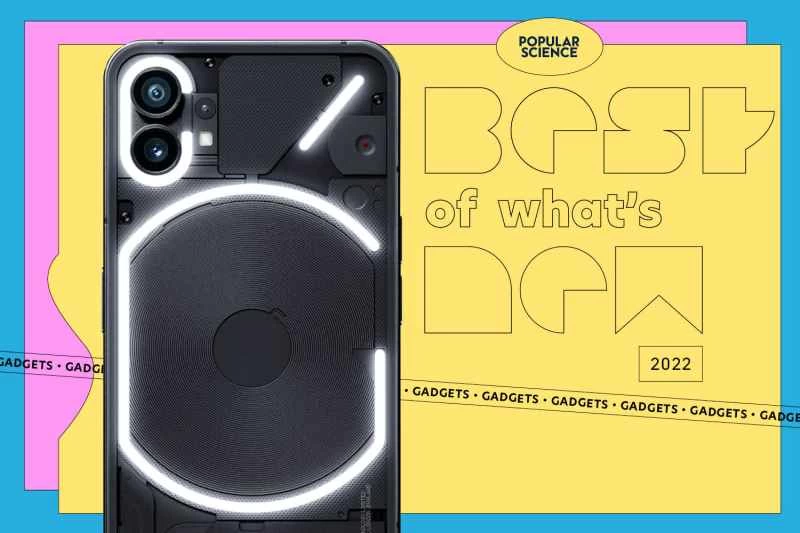
Phone (1) by Nothing: Light-based notifications help kick the screen habit
From the front, Nothing's debut phone looks a lot like a typical flagship Android device. Flip the phone over, however, and you'll find Nothing's extremely clever light-based notification system, designed to let users know what's happening on their device without having to look at the screen. Users can customize the lights (Nothing calls them glyphs) in a surprising number of ways. For instance, individual contacts can have their own light pattern that flashes whenever they call. A strip of LEDs at the bottom of the device can act as a battery charge indicator or give feedback from the built-in Google Assistant. The circular ring of lights around the center surround the Qi wireless charging pad, which can top up a pair of earbuds. Beyond the built-in functions, the lights are deeply customizable and will only gain more functionality in future updates. After all, anything that helps look at our phone screens less is OK with us.
Car Crash Detection by Apple: Smart sensors that can save a life in an accident
One of the most advanced features of this year's iPhone and Apple Watch models is one the company hopes you'll never have to use. Car Crash detection uses an iPhone 14 Pro's or Apple Watch 8's upgraded gyroscope, which can measure up to 256 G of force, and checks for changes 3,000 times per second. This data, along with information collected by an accelerometer and the built-in barometer, can sense the change in a car's cabin pressure caused by a deployed airbag. Once it detects a crash, the watch will automatically send emergency services to your location if you don't respond to an alert within a few seconds. Your device will also give you the option to manually call emergency services if you're conscious but need help. The feature is enabled by default, and the information your phone collects is never shared with Apple or a third party.
健康

Almost three years into the pandemic, the spotlight isn't just on COVID medicine anymore. While booster shots and take-home antiviral pills gave us new tools to fight the infectious disease, health researchers and drug makers regained momentum in other crucial areas, like organ transplants, STI prevention, and white-whale therapies for alopecia and HIV. At the same time, AI deepened its role as a diagnostic aid, while mental health services got an accessibility boost across the US. We know the pandemic isn't over—and other pathogens and illnesses are likely lurking undetected—but the progress we make in medical labs, factories, and care centers can help nurse societies back to health before the next storm hits.
Grand Award Winner
AuriNova by 3DBio Therapeutics: A replacement ear that's made from ear cells
About 1,500 people in the US are born each year with absent or underdeveloped external ears. Traditional reconstruction techniques might fix the cosmetic issue, but a new 3D-printed ear transplant, called AuriNovo, offers a living substitute. The implant is made with proteins, hydrogel, and a patient's own cells, giving it far more flexibility than any constructed with synthetic materials; plus, the procedure is less invasive than, say, transplanting tissue from a patient's ribs. To build the replacement, a surgeon first takes a sample of an individual's ear tissue to separate and culture the cartilage-making cells. Then, based on a 3D scan of the fully formed ear on the patient, the part is printed with collagen-based “bio ink” and surgically inserted above the jaw. A 20-year-old woman from Mexico was the first to get the implant this June. 3DBio Therapeutics, the New York-based regenerative medicine company behind AuriNovo, hopes to use the technology to one day create other replacement body parts, like noses, spinal discs, and larger organs.
Paxlovid by Pfizer: The first take-home treatment for COVID-19
COVID therapies have come a long way since the start of the pandemic, and now include several antiviral drugs and monoclonal antibodies. But Pfizer's Paxlovid was the first oral treatment for the disease to receive emergency authorization from the FDA, meaning it can be obtained with a prescription. It's also highly effective: Clinical trials show it reduces hospitalization and death from the virus up to 90 percent more than a placebo. The remedy is a combination of two pills: nirmatrelvir, which prevents the novel coronavirus from replicating, and ritonavir, which causes the body to metabolize nirmatrelvir more slowly. The drug does have downsides—it can interact with other medications and sometimes causes a foul aftertaste. Plus, rare cases of rebound COVID symptoms and positive tests have occurred in people following Paxlovid treatment, although research indicates that the latter might be related to the immune system responding to residual viral RNA. Still, it represents a crucial new safeguard for healthcare providers and the public.
EVO Visian Implantable Collamer Lenses by STAAR Surgical: Combining the perks of contacts and laser surgery
Most cases of nearsightedness and astigmatism, which is blurred vision caused by an irregularly shaped cornea, can be fixed with laser eye surgery. But the procedure requires some corneal tissue to be removed and often leaves recipients with lingering dry eyes. EVO ICL provides an alternative with a minimally invasive new way to correct or reduce both conditions. During the approximately hour-long procedure, a flexible collagen-containing lens is implanted between the iris and natural lens. The implant is meant to sit in the eye permanently, but can also be plucked out by an ophthalmologist if needed. In published clinical trial results, close to 88 percent of patients reported 20/20 or better and nearly all achieved 20/32 or better distance vision after six months. The lenses also block some UV rays for added protection.
Olumiant by Eli Lilly and Incyte: Long-term relief for severe alopecia
More than 300,000 people of all ages in the US live with severe alopecia areata, a condition that causes the immune system to attack hair follicles, leading to patchy baldness on the scalp and elsewhere. Hair loss in the nose and ears can affect patients' hearing and allergies, and a lack of eyelashes can leave people vulnerable to eye irritation from dust. Olumiant, the first medication to secure the FDA's approval for severe alopecia, can help hair grow back over the entire body. It belongs to a group of drugs called JAK inhibitors, which block certain inflammation-promoting enzymes. It was originally greenlit by the agency in 2018 to treat some forms of rheumatoid arthritis, but in clinical trials for alopecia, it helped roughly a third of participants to regrow up to 80 percent of their hair by 36 weeks, and nearly half after a year. Other JAK inhibitors in development could provide alternatives for patients who don't fully respond to Olumiant.
AIR Recon DL by GE Healthcare: Sharper MRIs in half the time
Laying motionless for an hour or longer in a magnetic scanner can be a claustrophobic and sometimes nauseating experience. A next-level neural network by GE Healthcare reduces the stress on patients, while filtering out visual noise from movement or faulty processing. The software combs through raw radio-wave data from MRI machines and turns the most accurate bits into high-resolution 3D images. Originally, the AI-reconstructed images had to be stitched together—but the updated tech, which received FDA approval this September, delivers in one go. The speedy precision can cut exam times in half, help hospitals and clinics serve more patients, and possibly improve the rate of diagnosis by giving radiologists a much cleaner view of tissues, bones, masses, and more.
ONE Male Condom by ONE: Latex that works for anal sex
At first glance this condom isn't all that different from those by other brands. It's made from natural latex, comes in three thicknesses, and has a wide range of sizes for best fit. But the contraceptive is the first to also be clinically tested for STI protection during anal sex—and has proven to be extremely effective. In studies involving 252 male-male couples and 252 male-female couples, the condoms had a less than 2-percent chance of breakage, slippage, discomfort, and adverse events (which included urinary tract infections and bacteria and viruses spread during sex). With such a healthy showing, the company earned the FDA nod to label the product as “safe for anal sex.” With widespread availability, there's hope that the condom can help beat back a record rise in chlamydia, gonorrhea, syphilis, and other STIs.
Bivalent COVID-19 vaccines by Moderna and Pfizer-BioNTech: A one-shot-fits-all approach
One of the niftiest features of mRNA vaccines such as Moderna and Pfizer-BioNTech's COVID shots is that they can be tweaked and scaled up quickly to keep up with an ever-changing virus. This August, the FDA authorized the first bivalent COVID boosters, modified with new genetic data to target both the original version of SARS-CoV-2 and the Omicron sub-variants BA.4 and BA.5. Just how much added protection the bivalent shots offer against the latest versions of COVID remains to be seen, although in early results, the Pfizer-BioNTech booster increased antibodies against the BA.4 and BA.5 sub-variants by up to 11 times, while the Moderna booster did so by up to 15 times. Experts anticipate that the bivalent COVID vaccines, which are available to all adults and children ages 5 and older in the US, could save thousands of lives if the virus surges again this winter.
Umbilical cord blood transplant for HIV by Fred Hutchinson Cancer Research Center and Weill Cornell Medicine: The right cells for viral resistance
There are now three official cases of patients in long-term HIV remission—but this one might be the most promising for the millions around the world living with the virus. In 2017, an unidentified American received a blood transplant packed with genes that were resistant to the pathogen behind AIDS. More than four years later, her doctors at Weill Cornell Medicine confirmed that the procedure at Fred Hutchinson Cancer Research Center had indeed made her free of the disease. The miraculous sample was specifically taken from a relative's umbilical cord blood cells, which were still in the process of maturing and specializing, making it easier for the transplant to take. Previous attempts to cure the disease depended on bone marrow donations that carry a mutated gene only known in Northern Europeans. This alternative treatment makes transplants more accessible for patients from other ethnic backgrounds, so their bodies can fight HIV in the long run as well.
988 Suicide and Crisis Lifeline by SAMSHA: Streamlining the call for help
When you have a general emergency, you might call 911. But for people experiencing a mental crisis, the number has been a lot less intuitive. This July, however, the Suicide and Crisis Lifeline, run by the US Department of Health and Human Services since 2005, fully switched over to a three-digit code that's easy to punch in: 988. The shortcut was years in the making, but required major collaboration with the Federal Communication Commission to connect every phone service provider to the alternative number. Since it went live, officials have reported shorter hold times and a 45-percent increase in use compared to August 2021, including on a specialized veteran hotline. The service shakeup also came with $177 million for states and tribes to support the transition in different ways, like alleviating surcharges, setting up call centers, and integrating crisis relief with existing or new emergency responses.
eCoin Peripheral Neurostimulator by Valencia Technologies: A discreet implant for bladder control
Pads, vaginal seals, and skin patches can be a burden for anyone who has to deal with urinary incontinence on a daily basis. A new electrode device, about as small as a nickel and implanted above the ankle, nips the issue in the bud in a more private and convenient way. Incontinence typically occurs when the muscles in and around the bladder contract too often or too much. To prevent leaks and constant trips to the toilet, the eCoin sends low-key shocks through the tibial nerve, targeting the pelvic organs and relaxing the bladder wall. A doctor can control the intensity of the pulses with a remote, making the device more customizable for a broad range of patients. Neurostimulators have become a vanguard treatment for different nervous system conditions, including chronic back pain and even paralysis—but few are so adaptable as this.
娛樂

The entertainment category for Best of What's New used to primarily contain devices meant for consuming content. But that's changed. While our Grand Award Winner goes to a big-budget movie this year, you'll find an increasing number of devices meant for actually making content. Self-flying drones, all-encompassing camera rigs, and even high-end monitors give people the opportunity to make their own content rather than simply consuming it. Other items on this list—primarily the earbuds—provide a reminder that content is a constant part of our lives. We've changed the content we consume for entertainment, but more than that, we've changed the way we interact with it. And these gadgets help shape that relationship.
Grand Award Winner
Top Gun: Maverick by Skydance Media/Paramount: A high-speed upgrade to practical filmmaking
We're all too used to watching computer-generated action sequences in movies. When Hulk smashes up the scene or aliens attack a city, we know it's fake. The sequel to Top Gun , which arrived in May—36 years after the original—did it differently. Actors trained in real aircraft to prepare to climb into Navy F/A-18F Super Hornets, and when they did, they experienced crushing G forces as the jets maneuvered at speeds that ranged from about 250 mph to more than 400. To film it, the studio turned to custom cameras carefully mounted within the cockpits, and other aircraft like the L-39 CineJet shot while airborne, too. That approach, plus scenes shot on both the USS Theodore Roosevelt and USS Abraham Lincoln aircraft carriers, all add up to give the film a degree of excitement and verisimilitude that's rare. While the film is still a product of Hollywood that made some use of CGI, and doubles as a recruiting vehicle for the Navy, we still salute its commitment to capturing the thrill and speed of Naval aviation.
Freestyle Projector by Samsung: An advanced projector that handles its own setup process
Samsung's Freestyle fixes one of our biggest complaints with projectors: that moving them to find the perfect angle is a pain. The floating, tube-shaped all-in-one projector is attached to its frame on a pair of hinges, which lets it be tilted up or down with very little force. The Freestyle can be twisted a full 180 degrees, allowing it to be pointed forward for a traditional viewing experience, or vertically to play games on your ceiling. You can use your phone to enable “smart calibration,” which adjusts its brightness and color settings based on the color of your walls and the room's lighting conditions. The Freestyle's fun form factor and smart settings are complemented by impressive hardware features, like native 1080p resolution, stereo speakers, and an HDMI port for connecting external devices. There's also a USB-C port in case you'd like to connect the Freestyle to a high-capacity power bank to take it on the go.
Frame TV Anti-Glare Matte Display by Samsung: A 4K TV that isn't afraid of a bright room
A couple of years ago, Samsung imagined a creative way to make use of a large, borderless, high-resolution screen when you're not using it to watch videos or play games: displaying famous artwork on your wall. The problem was the TV's LCD panel, which reflected light and made older paintings look like they were displayed on a screen rather than a canvas. That changes with the second-generation Frame, which has an anti-reflective matte display. Despite the change in technologies, Samsung says you'll still be able to see a billion colors on the screen, and that it'll continue to automatically adjust its color balance based on your brightness preferences. If you can't justify the cost of an original Rembrandt, Samsung's new Frame will be the next best thing.
Linkbuds by Sony: Earbuds that mix your audio with the real world
Sony created its LinkBuds to be the antithesis of noise-canceling headphones. They let outside sound in so you never need to take them out. The buds have a hard-shelled body, which means they won't create a tight seal around your ear, and boast a circular cutout, which Sony calls an open ring. The ring gives LinkBuds their unique look, and is also where the earbuds' driver is located. Sound is fed from the ring through the bud into your ear, along with some noise from the outside world. You'll hear cars honking, airplane engines, and people on the street. But if you're a runner who wants to hear a vehicle approach, this is a feature, not a bug.
QC II earbuds by Bose: Active noise cancellation that works across every frequency
Typical noise-canceling headphones have trouble blocking out sound in the middle frequencies between roughly 120Hz and 400Hz. That allows sounds like voices to occasionally get through. Bose has totally reconfigured its noise-canceling algorithm and hardware setup in order to fill in that ANC gap without creating uncomfortable ear pressure or compromising audio quality. The company adjusted its noise cancellation and tuning to a user's body by measuring the way a chime reflects off the inside of your ears back to the earbuds' microphones. The attention to detail paid off, as outside noises are greatly reduced even if you're not listening to music. Bose offers three listening modes by default, but you can create custom ones using the company's app if you'd like to crank active noise cancellation all the way up, or mellow it out.
Ronin 4D by DJI: An all-encompassing cinema rig and steadicam for creators on a budget
DJI's Ronin 4D rig looks like a futuristic weapon pulled from a Star Wars flick. In reality, it's a full-featured cinema rig that combines a number of essential movie-making tools into one compact and extremely stable camera rig. The modular system includes DJI's flagship Zenmuse camera, which can capture 6K raw video at up to 60 fps or 4K video at up to 120 fps. It also boasts a full-frame sensor and interchangeable camera mounts. The whole imaging rig sits on a 4-axis gimbal that stabilizes footage so convincingly that it sometimes looks like it was shot on a dolly or a crane. Because the whole system is modular, you can swap parts like monitors, storage devices, batteries, and audio gear on the fly and customize it for your shooting needs.
Alienware AW3423DW QD-OLED Gaming Monitor by Dell: The first gaming monitor with a new brighter version of OLED tech
OLED monitors typically provide unmatched contrast, image quality, and color reproduction, but they lack brightness. Quantum dot (or QLED) displays crank up the illumination, but lose some of the overall image impact found on an OLED. Enter QD-OLED. Like a typical OLED display, each pixel provides its own backlight. But the addition of quantum dots adds even more illumination, giving it a total peak brightness of 1,000 lumens while maintaining the certified HDR black levels to create ridiculous levels of contrast. And with its 175Hz native refresh rate, and super-fast 0.1-second response time, you can't blame this pro-grade gaming monitor if you're always getting eliminated mid-game.
Arctis Nova Pro Headset for Xbox by SteelSeries: A gaming headset that works across all of your machines
Gaming headsets typically require players to pick a platform for compatibility when you buy them. Some work with a console as well as a PC, but SteelSeries has given its Arctis Nova Pro headset the hardware it needs to work with Xbox, PS5, PC, and even the Nintendo Switch—all at the press of a button. Its secret lies in the GameDAC (short for digital audio converter), which connects to multiple systems and pumps out high-res certified sound with 360-degree spatial audio from whatever source you choose. Plush ear cups and a flexible suspension band ensure comfort, even during long, multi-platform gaming sessions.
Skydio 2+ drone by Skydio: A drone that follows commands or flies itself
Crashing a drone is bad for your footage—and your budget. But this high-end flying machine avoids obstacles with an advanced system that adjusts more than 500 times per second to prevent disaster. A fish-eye lens allows the drone to see 360 degrees around the craft. A dual-core Nvidia chipset generates a 3D-world model with more than 1 million data points per second to identify and avoid anything that might get in its way. With all those smarts, creatives can simply tell the drone to track them or program complex flight paths and the Skydio2+ will capture 4K video at 60 fps on its own. The drone also comes with more than 18 predetermined paths and programs that can make even basic action look worthy of a Mountain Dew commercial.
Dione soundbar by Devialet: True surround sound on a stick
Most soundbars allow buyers a chance to expand their audio system and add satellite speakers or at least a subwoofer. The Dione is different. It's a totally stand-alone system that relies on nine 41mm drivers and eight built-in subwoofers in order to fulfill the entire sonic range you need to enjoy everything from high-pitched tire squeals to rumbling explosions. Thanks to its Dolby Atmos integration, it mimics a true 5.1.2 surround sound system. The sphere in the center of the bar contains one of the 41mm drivers; it rotates to allow the soundbar to achieve its spatial audio ambitions, whether it's sitting on a TV stand or mounted somewhere around the television. Devialet's Speaker Active Matching technology watches over the entire array to make sure none of the individual drivers surpass their optimal operating frequencies, and it even has a dynamic EQ mode that brings up dialog—so you can finally turn off the closed captioning and still understand what the actors are saying.
個人護理

Our new pandemic normal made soothing stress and monitoring our health the main goals of most personal care products in 2021. But this year saw a flood of launches geared at leaving home and showing off: vibrant cosmetics, anti-aging formulas and gizmos, and skincare products designed to protect from outdoor pollutants. From a multi-dimensional hair dye that draws upon the iridescence of butterfly wings to an end-of-life solution that nourishes the Earth instead of polluting it, these 10 wellness and beauty products stood out above the rest, offering true innovations in a world too often flooded with trendy buzzwords and empty promises.
Grand Award Winner
AR Beauty Tutorials on TikTok by Grace Choi: Filters that aim to educate, not manipulate
Most TikTok filters let you play pretend and “try on” makeup—or, more insidiously, warp the shape of your face to fit an unattainable standard—but a new generation of augmented reality overlays aim to teach you something instead. Grace Choi, a Harvard MBA known for creating 2020 BOWN winner Mink's makeup palette printer, changed the conversation this year with a digital brow stencil and contouring filter. While tutorials often assume the viewer shares the same face shape as the demonstrator, Choi notes that her filter can map out the slopes and dips of each user's unique features and guide their makeup placement accordingly. The technique—which involves using contrasting light and dark pigment to subtly highlight some parts of your facial structure and minimize others—is notoriously tough to master using videos, as ideal pigment placement varies depending on bone structure. Choi's filter instantly creates an easy-to-follow diagram, showing you exactly where to apply your makeup to make your cheekbones pop and your jaw look more defined.
YSL Beauté Rouge Sur Mesure by L'Oreal: Personalized lipstick, made on-demand
Whether you want your lipstick to match the sunset or your blouse, the Yves Saint Laurent Beauté Rouge Sur Mesure can produce any hue with the touch of a few buttons. The handheld system uses color cartridges in swappable palettes of red, nude, orange, and pink to create thousands of personalized shades. The accompanying app lets you scan any object for reference, or peruse a color wheel for inspiration. You can even try the color on virtually before the gadget mixes it up for you. A hydrating lipstick packed with pigment emerges at the top of the device into a chic, removable YSL palette—perfect for on-the-go touch-ups.
Gro Ageless by Vegamour: A duo that keeps you from going gray
Less than 30 percent of hair graying is dictated by your genes, according to a 2016 study in Nature . Instead, it's predominantly driven by stress, excess UV exposure, diet, and smoking. Increased inflammation damages melanocytes, the pigment-producing cells in the hair, and saps them of their hue. Research suggests that maintaining healthy levels of B vitamins, copper, zinc, and selenium can safeguard melanocytes from damage. Vegamour's Gro Ageless system includes oral supplements to combat those deficits from within, along with a serum that penetrates the hair follicle to stimulate melanocyte stem cells. The plant-based products add shine to strands, improve the texture of aging tresses, and can even help restore color as new hair grows in.
Smoke Alarm Drops by Pour Moi: A serum that shields your skin from wildfire smoke
It's no secret that our planet is in trouble—and that means your skin is, too. Pour Moi Smoke Alarm Drops mark the first serum formulated specifically to protect skin when it's exposed to smoke. Some skincare products that lock moisture in can also trap in pollutants. The resulting oxidative stress (an imbalance in a body's ability to remove toxins or repair damage) can lead to sagging due to collagen loss, fine lines and wrinkles, and rough texture. Pour Moi's drops address this by creating a shield within the skin's surface layer, using hyaluronic acid, emollients, and soothing and repairing botanicals.
Dr. Harris Anti-Wrinkle Sleep Mask by CurrentBody: An eye mask that melts stress as you sleep
This mask aims to help you get your beauty sleep—literally and figuratively. The inside of the Dr. Harris Anti-Wrinkle Sleep Mask is lined with slightly raised silicone dots. Each presses imperceptibly against some of the 17,000-plus touch receptors in the skin of your face. Those receptors convert mechanical pressure into electrical signals for your autonomic nervous system, telling your brain to unfurrow your brow. Wearing the eye covering for just 15 minutes can help relax your muscles and make it easier to drift off to slumber. And since it smooths out your forehead, it also reduces the appearance of wrinkles between your eyebrows for up to five hours.
The Loop Cocoon by Loop Biotech: The world's first living coffin
It's time to close the loop on the circle of life. Modern burial practices pump heaps of toxic chemicals into the ground and cremation pollutes the air with greenhouse gasses. Over the last several years, several solutions for greener burials have emerged—California has even given human composting the green light—but for most people, such alternatives have remained out of reach or even illegal. This year, Dutch company Loop Biotech became the first to offer a “living coffin” for sale to the general public. The Cocoon is made of dried mycelium, which is the cobweb-like filament that forms mushrooms and other fungi. This substance creates a sturdy coffin that breaks down once exposed to moist soil. In less than two months, it degrades entirely and seeds the burial site with mushrooms. The fungi then helps the corpse biodegrade more quickly, breaking down heavy metals and pollutants in its tissues so it can nourish surrounding plants instead of poisoning them.
TheraFace PRO by Therabody: The utility player of facial gadgets
There are nearly endless beauty gadgets you can buy to scrub, massage, and even electrify your face into submission. Some of them even work: Microcurrents can temporarily soften wrinkles, lymphatic drainage can briefly depuff swollen sinuses, and LED lights can kill acne-causing bacteria and stimulate skin-plumping collagen. But implementing an arsenal of such tools takes deep pockets (and a big medicine cabinet). Enter the TheraFace Pro. In addition to offering the percussive massage the brand is known for—appropriately toned down for the delicate bones of the face—the device's suite of magnetic attachments also provide hot and cold compresses, microcurrent treatments, deep facial cleaning, and multi-hued LED light therapy. Whether you need to soothe a sore jaw muscle or induce a dewy glow for a special event, the TheraFace makes it downright sensible to own an absurd array of skincare gizmos.
Colour Alchemy by The Unseen and Schwarzkopf Professional: The world's first holographic hair dye
Most people who color their hair are looking for multi-faceted, prismatic hues—ones with slight variations that catch the light for a more interesting (and often more natural-looking) visual effect. That usually means lightening some pieces of hair, darkening others, and using multiple shades of toners and dyes. Colour Alchemy by The Unseen harnesses the power of physics to create a totally new kind of hair color: a temporary dye that turns hair strands into light-scattering prisms. The products rely on structural color—the same principle that gives beetle shells and butterfly wings iridescent hues using cellular shape instead of actual pigment. The result is hair that shifts across a spectrum of vibrant color when exposed to changes in temperature (like a blast of cool air) or light (like a camera flash). Unlike most temporary dyes, Colour Alchemy shows up on dark tresses without any bleaching. In fact, dark hair provides the best base for its sun-scattering holographic crystals.
Venom Go by Hyperice: A pocket-sized recovery tool that melts sore muscles in a flash
Recovery brand Hyperice has designed a super-portable gadget that melts muscle tension fast. The company's Venom line, which combines vibration and targeted heat to create not-your-grandpa's-heating-pad wearables, first launched a few years ago. But this update gave the fitness community something to buzz about. The electronic portion of the Venom Go is small enough to fit in a pocket, and you can use the simple button interface anywhere. Just slap one of the reusable adhesive patches onto the place you want to treat, snap the magnetic device into place, and turn it on for instant heat and soothing vibration.
Super Stay Vinyl Ink Longwear Liquid Lipcolor by Maybelline: A lipstick that truly lasts for hours
Many lipsticks claim to be transfer-proof, but tell-tale signs prove otherwise—ruby stains on a coffee cup, pink smudges inside a face mask, berry splotches after a smooch. Products that truly offer longevity usually manage the feat by drying with a plaster-like finish, leaving your lips feeling like drywall (and sometimes flaking as badly, too). Maybelline Vinyl Ink promises 16 hours of wear without any of those pitfalls. Seven years of research involving some 100 scientists are behind its dual-phase formula, which combines a long-wear pigment with an emollient silicone resin for moisture and shine. The two components purposefully stay separated until application, when the user shakes the tube to combine them—a process that borrows the trick protein shaker bottles use to blend powder and water on the go.
Emergency Services and Defense

The past year has been marked by serious challenges, from the ongoing climate emergency, a subsequent increase in extreme forest fire frequency, and the devastating war in Ukraine following Russia's invasion. But we've also seen true innovation in the field of crisis response. More exact location systems will help emergency services find people in trouble quicker. Better respirator technology is rolling out, designed to help wildland firefighters breathe a little easier. And fire trucks are finally starting to go electric. This year's best emergency services and defense innovations offer paths out of tight spots, aiming to create a safer future—or at least a better way to handle its myriad disasters.
Grand Award Winner
Wildland Firefighter Respirator by TDA Research: A lightweight, field-rechargeable respirator for forest firefighters
Forest fire fighters need a lightweight wearable respirator to protect them from inhaling smoke. The Wildland Firefighter Respirator, by TDA Research, uses a hip-mounted pump to pull air through a HEPA filter, channeling it to a secure but loose-fitting half-mask (a helpful feature for people who haven't had the chance to shave while in the field). A sensor in the system detects air flow direction, letting the pump only blow at full strength when the user inhales. Importantly, the device weighs just 2.3 pounds, which is only about 10 percent the weight of a typical urban firefighting Self Contained Breathing Apparatus. About the size of a 1-liter water bottle, the respirator is powered by a lithium-ion battery pack. To recharge in the field or away from a generator, that pack can also draw power from 6 AA batteries. Bonus: Even though it was designed for safety professionals, the device could also become civilian protective gear in fire season.
Connect AED by Avive: Connecting defibrillators to those in need, faster
Avive's Connect AED (Automated External Defibrillator) is designed to be a life-saving device that's also smart. The devices can automatically do daily maintenance checks to ensure they can perform as needed, thanks to WiFi, cellular, bluetooth, and GPS. Plus, with that connectivity, 911 operators could alert nearby Connect AED holders to respond to a called-in cardiac arrest, saving time and possibly someone's life. Once a person has been defibrillated, Connect's connectivity also lets emergency room doctors see data the device collected, such as the patient's heart rhythm, as well as the device's shock history, complete with timestamps. The Connect AED also has a backpack-like form factor and touch screen for intuitive use.
Scalable Traffic Management for Emergency Response Operations by Ames Research Center: Letting drone pilots clear skies for aerial emergency vehicles
The sky above a forest fire can be a dangerous, crowded place, and that was before forest fire fighters added drones joined the mix. Developed by NASA, the Scalable Traffic Management for Emergency Response Operations project (STEReO) is developing tools for managing the complicated airspace above an emergency. In the spring of 2023, a NASA team field-tested a STEReO's suitcase-sized prototype device, called the UASP-Kit, to monitor drones safely in the open airspace around prescribed burns. By tracking transponders on crewed aircraft, the UASP-Kit can play a sound through tablet speakers, alerting drone operators when helicopters and planes fly close to where they are operating. That hopefully lets drone pilots get their equipment to safety without risking aerial collision.
Locate Before Route by AT&T: Pinpointing the emergency
When a person in an emergency calls 911 for help, that call is routed, based on its location, to the closest 911 operator. For cell phones, that meant matching the call to the nearest tower and hoping it sent the call to dispatch in the right county. But in May 2022, AT&T announced the nationwide rollout of a better system. Leaning on the improved location services on iOS and Android phones, AT&T's Locate Before Route feature can pinpoint the location of the emergency call within 50 meters, sometimes even as precisely as 15 meters. This better location information should allow the call to be routed to the best dispatch center, ideally helping responders arrive faster. That data can only be used for 911 purposes, and helps first responders get where they're needed quickly, nationwide.
GridStar Flow by Lockheed Martin: Helping to power defense with renewable energy
The US military is a massive consumer of fossil fuels, but if it wants to use more renewable energy, it needs a way to store that electricity to power vital functions. GridStar Flow, developed by Lockheed Martin for the US Army, is a massive battery complex that takes advantage of the space of Colorado's Fort Carson to go big. It will store up to 10 megawatt-hours of juice, thanks to tanks of charged electrolytes and other equipment. Construction at Fort Carson broke ground on November 3, but the company has already tested out a smaller flow battery in Andover, Massachusetts. Using electrolytes that can be derived from commodity chemicals, GridStar Flow offers a power storage and release system that can help smooth the energy flow from renewable sources.
Volterra Electric Firetruck by Pierce: A more sustainable, quieter fire truck
Fire trucks are big, powerful vehicles, but they run on diesel, a polluting fossil fuel. The Pierce Volterra truck can deliver all that power on an electric charge, and it can also run on diesel fuel if need be. Already in use with the Madison, Wisconsin fire department, but with contracts to expand to Portland, Oregon and Gilbert, Arizona underway this year, the Volterra has enough battery power for a full day as an electric vehicle. The electric power helps complement a transition to renewable energy, but it also comes with immediate benefit to the firefighters: the vehicle doesn't spew exhaust into the station. The quiet of the electric engine also lets firefighters coordinate better on the drive, and can help cries for help be heard when the responders arrive on site.
Vampire Drone by L3Harris: Taking down drones from kilometers away
Drones are increasingly a part of modern battles, seen in wars across the globe but especially with Russia's invasion of Ukraine, with both countries using a range of uncrewed aircraft to scout and fight. In August 2022, the Department of Defense announced it would send a new tool to aid Ukrainian forces as a way to counter Russian drones. Made by L3Harris, the Vehicle-Agnostic Modular Palletized ISR Rocket Equipment (VAMPIRE) system is a rocket launcher and sensor kit that can be mounted to a range of vehicles, providing a means to damage and destroy drones at a range of at least three miles. The laser-guided rockets, directed by a human operator, explode with a proximity fuse, making near misses into effective takedowns.
Emergency SOS via satellite by Apple: Locating lost hikers with satellites
For hikers lost in remote parts of the United States and Canada, calling for help means hoping for cell phone coverage, or waiting for a serendipitous rescue. But Apple's Emergency SOS via Satellite, announced September 2022, will let people with an iPhone 14 transmit emergency messages via satellite, provided they can't first establish a cellular connection. Texters will have a tap-through menu to create an information-dense but data-light report, and provided trees or mountains don't block the signal, they can transmit crucial information, like what kind of injuries someone has sustained. With a clear view of the sky and fifteen seconds, a cry for help can reach space and then, even better, rescuers on Earth.
汽車

We may be decades away from replacing fossil-fuel-powered vehicles with a fully electric fleet, but at the same time, EVs have continued their impressive gains on US roadways. But the most innovative companies in the automotive industry are looking beyond just batteries and charging infrastructure. They're making the most of what we've got while doing the heavy lifting that goes unnoticed: Making vehicles lighter, more aerodynamic, more useful, and less wasteful. They're also giving us faster and extremely entertaining cars—and we're here to honor their technical brilliance.
Grand Award Winner
Vision EQXX by Mercedes-Benz: The slipperiest EV
This year, Mercedes-Benz introduced a one-off, world-beating car with an altruistic purpose: To make the most out of the heavy batteries at the core of the growing EV fleet. The numbers for the Vision EQXX are otherworldly for an EV: 3,900 pounds of car and 747 miles on a single charge. It's slow by EV and gasoline standards, yet modesty was the mission. So how did they do it? Here's one trick: Its body can extend its sweptback tail at speed another eight inches, helping cut drag by half that of a normal sedan or crossover. To further augment efficiency, Mercedes-Benz opted for a Formula 1 subframe, magnesium wheels, tiny side-view mirrors, and a 100-kWh battery that the company claims is half the size and almost a third lighter than the powerpack in their production EQS sedan. Reducing mass and improving efficiency are old mechanical concepts that all manufacturers need to revisit if EVs are to succeed in the gasoline era. For that to happen, however, the breakthroughs must be this dramatic. Though it's only a concept, the Vision EQXX may be the spark that ignites that reality.
Uconnect 5 by Jeep: Putting the passenger in command
Large SUVs typically allow the people in the back to zone out and watch whatever's on the screens in front of them. But in the Jeep Grand Wagoneer, all the fun is in the shotgun seat—and won't distract the driver. The Uconnect 5 infotainment system can run up to eight independent displays, including a 10.3-inch touchscreen built into the passenger-side dash. To reduce distraction, Jeep tints the display so it's a faint glow to the driver while still looking bright to the passenger. You can connect an Xbox to the HDMI port, stream a ton of titles with the built-in Amazon Fire TV, control the 360 cameras, and set the navigation system by sending a chosen route to three of the driver displays. Best of all, there's no ugly screen-mounting hardware to clutter the polished black dash.
Pilot Sport EV by Michelin: When tires go electric
Electric vehicles—performance models especially—put the strain of extra mass and torque onto their tires. The Pilot Sport EV is the first of a growing segment of EV-specific treads designed to improve both range and grip. Typically, a manufacturer can increase range by reducing the rolling resistance—the slowing effects of friction—at the expense of grip. These Michelins find balance by putting different parts of the tire in charge of handling torque and mass: The center of the tire has a grippier compound to take the brunt of an EV's torque, while the shoulders are optimized for lower rolling resistance. It's a mix they honed over the last eight years on Formula E racers. Compared to the company's gold standard, the Pilot Sport 4S, the Pilot Sport EV increases range by as much as 20 percent with nearly the same level of traction.
Android Automotive OS by Google: A car OS from an OS company
Google's suite of car-specific software has been mediocre for the past several years. Android Auto projects a limited array of Android apps onto a car's infotainment display; then there's regular old Android, which is tablet software that many automakers modify for their vehicles. In either instance, their interfaces feel half-baked. Enter Android Automotive OS, which is Google's first operating system developed specifically and only for cars. Through it, the voice assistant, maps, keyboards, and the Play store run faster and function more intuitively than a smartphone connected to Android Auto or Apple CarPlay ever could. Thanks to it, the experience on the latest Volvo, Polestar, and Chevrolet vehicles is dramatically better than anything those automakers had ever coded themselves.
GR Corolla by Toyota: A three-cylinder powerhouse
In 2022, it's rare to see automakers develop all-new gasoline engines. To see Toyota craft an engine with as much output per liter as a Bugatti Chiron? That's a cosmic event. The G16E-GTS spews 300 turbocharged ponies from three tiny cylinders displacing only 1.6 liters. This is the ferocious heart of the 2023 GR Corolla, an ordinary-looking hatchback. On the Morizo Edition, the turbocharger pumps 26.3 PSI of air through the intake—a monstrous amount that the fortified engine block can handle. First offered overseas in the smaller GR Yaris, this engine transforms the humdrum Corolla—the world's best-selling car of all time—into an everyday sports car. It's comfortable, practical, gets 28 mpg on the highway, and will absolutely embarrass a Porsche on a twisty road.
FC1-X by Nitro: Rally racing at its most extreme
The FC1-X is what happens when motorcycle stuntman and record-breaking rally driver Travis Pastrana and a Swedish race team agree that Red Bull's Rallycross is too slow. The FC1-X is a custom, 1000-horsepower electric car that zaps to 60 mph in 1.5 seconds and can land a 100-foot jump. A major reason: The car's silicon carbide inverter is a fraction of the size and weight of a typical EV's inverter—the device that converts the battery's DC output to AC for the motors—and the battery can handle major power draws without overheating. It's unique to Pastrana's Nitro Rallycross series. As it evolves, FC1-X stands to influence the next generation of EVs—for both the track and the road.
Super Cruise by General Motors: Best hands-free system
General Motors' Super Cruise strikes an ideal balance between hands-free driving assistance—giving the human operator a break—and safety. Using a network of laser-scanned highways at 10 times the accuracy of a GPS map with a full suite of ultrasonic, radar, and infrared cameras, Super Cruise can operate on more than 400,000 miles of marked US highways, including executing automatic lane changes. Most important, however, is when it won't operate: Super Cruise will disable the system for the entire drive if the driver looks away for too long, a road is unmapped, the vehicle's data connection goes dark, or any number of failure points to keep the person behind the wheel engaged. Next up is Ultra Cruise, which promises “door-to-door” hands-free driving, but that may be years away.
Hummer EV by GMC: A maneuverable behemoth
Let's get this out of the way. From the standpoint of energy consumption, the GMC Hummer EV is wasteful—and, at nearly 10,000 pounds, it's a behemoth. Its battery pack is twice the capacity of the best Tesla Model S but delivers 80 percent of the EPA-estimated range compared to that vehicle. But underneath this super truck's extravagance is a mind-blowing method of four-wheel steering. CrabWalk sounds too ridiculous and motion sickness-inducing to be true, but it is: All four wheels can steer the truck diagonally. The rear rims steer in tandem with the front at up to 10 degrees, enough to let this massive vehicle dance sideways like a crustacean that needs to parallel park, moving up to 25 mph.
Nevera by Rimac: The most powerful production car
A Croatian scientist who converted his broken BMW to run on electricity is now, at age 34, the CEO of a hypercar company that's fresh off a merger with Bugatti. Mate Rimac's dream machine, the 1877-horsepower Nevera, has four electric motors and the stiffest carbon fiber monocoque—that's a combination of the car's frame and body—around. It's the world's fastest EV: 258 mph. Car enthusiasts with $2.4 million to blow will soon show us the evidence. But more importantly, Rimac's other partners, which include Hyundai and Porsche, will benefit from the company's EV expertise in future cars costing a fraction of that price.
MotoE by Ducati: The hottest electric racing bike
The heavy batteries that can be packaged easily in a car are harder to incorporate into a motorcycle that needs to balance. Instead of allowing a bulky, off-the-shelf battery pack to dictate the bike's design, Ducati designed the battery on its MotoE—which the entire field of the 2023 FIM MotoE World Cup will ride—so that it functions as an integral part of the bike's central frame instead of a bulky add-on. Two separate cooling systems (one for the 18-kWh battery, the other for the 150-hp motor and inverter) ensure the MotoE can sustain 171 mph and then pit for a recharge without needing to cool down. It might not be the first electric racing bike, but it is the first such bike that customers will ultimately want to ride on the road.
運動與戶外

This year's sports and outdoor innovations make our adrenaline-filled adventures smarter, while going easier on the Earth. On land, a bike helmet can be broken down and recycled at the end of its life. In the snow, a ski that helps you tear down the mountain can also be similarly repurposed. But the best sports and outdoor tech this year helps us communicate better—whether that be a new system for catchers to relay plays to pitchers, or a satellite safety beacon that keeps you connected to family and friends. One winner represents both: an electric joy ride that makes careening through the water easy, fun, and carbon-neutral.
Grand Award Winner
Orca Carbon by Taiga: A silent, safer emission-free joy ride
Personal watercraft like Jet Skis are fun to ride, but this year's winner makes them greener. Historically, personal watercrafts—or PWCs—operate on fossil fuel, emit noise up to 115 decibels, and leak unburned gasoline into the water. Enter the Taiga Orca Carbon, which takes electric vehicles aquatic. (The company built upon what it learned from its line of electric snowmobiles.) This PWC replaces the gas tank with lithium-ion batteries, which power the jet-drive impeller, creating an electric vessel that is silent and emission-free. The powertrain is located in the bottom of the hull for better handling and performance, which creates a safer ride. The Taiga Orca Carbon broadens the accessibility of on-water exploration, and shows that ditching the engine doesn't have to decrease the fun.
Canyon Packs by Slot: Gear designed for desert rappelling
Adventurers who go canyoneering squeeze through narrow sandstone passages, sometimes while walking in or swimming through a river, and nearly always must also manage technical gear like ropes and belay devices. Slot's Guide 50L and Rapide 38L canyoneering packs are specifically designed with these desert conditions in mind, with an innovative rope management system. A divider separates rope from gear and allows users to feed out only the amount of line they need—from 15 to 200 feet—for each rappel. The bag keeps the rest of the rope organized inside, along with the rest of your equipment. The result is a more efficient and safer system that eliminates the need to uncoil and recoil rope for each rappel.
Stealth driver by TaylorMade: A club that's one tough cookie
Drivers suffer the most damage compared to other golf clubs, experiencing 30,000 Gs of force in one swing. Carbon fiber—a lightweight, strong material—usually cracks under that amount of power, which led clubmakers to use flexible titanium faces for their drivers. But TaylorMade changes the golf club game with its new StealthDriver, finding a way to use carbon after all. Its light face can handle plenty of strokes, higher ball speeds, and longer drives, thanks to its 60 layers of carbon, reduced weight, and aerodynamic shape. Despite the changes, it still gives off the satisfying thwack golfers love from a club with an all-metal head.
Piston Pro X by Kuat: An easy-loading and safe bike rack
Bike racks are notoriously difficult and annoying to load. Most require two hands, which makes securing a bicycle while holding the rack open almost impossible if you're flying solo. But Kuat's Piston Pro features smooth-opening, hydro-pneumatic arms that you can operate with just one hand and let you fasten a bike by the tires without touching the frame. The company also incorporates brake lights into the bike rack. The sleek, eye-catching piece of gear holds ebikes too; a separate ramp for electric bikes assists with loading. And a 12mm lock keeps everything secure.
Myelin Helmet by POC Sports: A lid that's recyclable
Bike helmets are typically in service for five to 10 years, then they head for the landfill. But the POC Myelin helmet gets a new life when its time protecting a rider's head is over. The headpiece may look like a regular cycling helmet at first, but inside its clean design hides a host of advanced technical details, such as adhesive-free assembly, a recycled fabric outer shell, and cutaway fasteners. These allow the helmet to be separated into individual pieces at the end of its life for easy recycling in your home's blue bin, or at your local recycling center.
Fuel EXe by Trek Bikes: An electric mountain bike with a no-engine feel
Typical ebikes deliver a whiny hum and noticeable surge when you pedal with the assist they offer. Other riders can find the noise obnoxious, too. But the Trek Fuel EXe is the best new “SL,” or superlight ebike, blurring the line between purely human-powered and pedal-assist bikes. Trek partnered with German robotics manufacturer TQ to develop the new HPR50 motor, which forgoes noisy belts and gears in favor of a refined system; it's smaller, quieter, and more durable than traditional ebike motors. The result is a sleek, powerful ride with a smooth boost that's hard to distinguish from your own pedaling power.
The ePE membrane by Gore: A new type of waterproof tech from an old-school company
Gore, the company that invented the waterproof but breathable GORE-TEX membrane in 1968, is back with a new material that aims to take planet-polluting chemicals out of outerwear. After more than seven years of development and rigorous testing, Gore built upon its experience with expanded polytetrafluoroethylene (ePTFE), polymer processing, and materials science to create an expanded polyethylene (ePE) membrane that's thin, light, and strong. The new material is also free of environmentally damaging perfluorochemicals (PFCs) and made with recycled nylon and polyester, resulting in a reduced carbon footprint. You can find the new ePE membrane—which has set a new standard in waterproofing—in GORE-TEX products like the Patagonia Storm Shift jacket and pants.
PitchCom by PitchCom Sports: A 150-year baseball problem, solved
Signs in baseball vary from team to team and player to player: Catchers flash two fingers so the pitcher knows to hurl a fastball; coaches use signs to tell a baserunner if they should bat or bunt. However, the opposing team can read these signs and use them to their own advantage, making sign-stealing a 150-year-old problem. Now PitchCom Sports—which created a wrist transmitter for catchers and a receiver for inside the pitcher's hat—has relieved professional players of the threat of intercepted signals. Phrases like “fastball” and “good job!” are pre-loaded as .mp3 files onto the PitchCom device and played when the catcher or coach presses the button. Only the people wearing the PitchCom receiver can hear the play. And, the commands can be played in any language, so all players on the team know the play.
Salem Dyneema Down Parka by Foehn: A puffy jacket that doesn't wear down
Down jackets are known for their warmth—and their short life span. Sportswear company Foehn solves inevitable wear and tear by incorporating Dyneema, an incredibly strong synthetic fiber previously used in backpacks and other outdoor gear. The tough new garment combines high-performance insulation with the practically indestructible Dyneema to create a jacket that won't rip while out on tundra escapades or be slashed by a dog's untrimmed nails. It's a lifetime investment for outdoor enthusiasts and those just looking for a tough, stylish, warm piece of kit.
The inReach Messenger by Garmin: A gadget for staying always connected
Satellite communicators can be expensive, tricky to connect to a signal when you need it, and are typically used for extreme outdoor adventures or emergencies only. (Or they require the newest iPhone, as we highlight in our Emergency Services and Defense category.) The Garmin inReach Messenger is designed for more everyday pursuits: when entering a deadzone during a road trip or staying connected while hiking far from cell towers. This 4-ounce personal safety device lets you text anyone from anywhere over satellite, through pairing it to your phone and with the Garmin Messenger app, by using its virtual keyboard, or utilizing preset messages on the device itself. In case of emergency, the inReach Messenger connects the user to the Garmin Response Center. And should your phone die, the inReach Messenger's Safety Charging gives your phone a partial charge for continued use.
Essential Ski by Rossignol: Reducing waste, one set of skis at a time
The Essential Ski is a first—and a feat—for Rossignol: It's made from 62 percent recycled, certified natural, and bio-sourced materials, including aluminum, steel, and wood. The design process uses no solvents or water. Plus, the ski can be recycled through a partnership with MTB Recycling that will repurpose the ski's materials to the automotive, garden, or construction industries. And it's produced using renewable energy. But don't let its Earth-friendliness fool you: It's a real-deal ski that lives up to Rossignol's performance and durability standards. Plus, they're not even guarding the secret of how they made it, so that others can make greener skis, too.
家

Renters, homeowners, and DIY-ers don't always have the time, money, or skills to accomplish the home improvement tasks on their lists. We get it. Fortunately, one of the benefits of living in a time of rapid innovation is that technology can easily step in where our brains, brawn, and bank accounts fall short. This year, you can upgrade your living space with an easy-install smart showerhead, use spray paint that doesn't drip, or even consider the most compact in-home water recycling system we've ever seen—and that's just the tip of the screw.
Grand Award Winner
Smart water recycling by Hydraloop: A compact, easy-to-use gray water recycling system
Gray water is the stuff that spirals down your shower and sink drains, and it's mostly clean, usable H2O that goes to immediate waste. Recycling this wastewater is doable, but the required systems are frequently large, maintenance-intensive, and involve a complicated jumble of pipes and valves. Hydraloop founder Arthur Valkieser changed that by redesigning existing water treatment technology to eliminate filters, and shrinking his device into something that looks a lot more like a modern household appliance. As water fills the Hydraloop's tank, sediment sinks to the bottom and lighter grime like soap and hair floats to the top, where it foams up and over as waste. Then, a torrent of air bubbles grabs any free-floating solids and removes them, too. The gray water then enters an aerobic bioreactor where live bacteria feast on any remaining organic material and soap. Every four hours after that, UV-C light disinfects the stored water to kill any remaining bacteria, and the non-potable (but sanitized) water is ready to go back into your washing machine, toilet tank, or garden.
Timberline Solar shingles by GAF Energy: Roofing and renewable energy in one
Installing traditional rack-mounted solar panels requires drilling through your existing roof, creating holes that can lead to leaks and water damage if they're improperly sealed. GAF Energy's Timberline Solar shingles, however, nail down just like regular asphalt roofing, thanks to a flexible thermoplastic polymer backing. With that supporting a durable photovoltaic surface, they'll hang tight in the rain, hail, and winds up to 130 mph. Even brighter: These shingles have serious curb appeal and you won't have to choose between spending on a roof replacement or investing in solar—you can do both at the same time.
3-in-1 Digital Laser Measurer by Dremel: Precise measurements of uneven surfaces
Anyone who's tried to measure an odd-shaped object knows the struggle of fumbling with a flexible tape, laboring through numerous calculations, or painstakingly determining the length of a string that once followed the contours of the piece in question. Dremel's 3-in-1 digital laser measurer makes this job easier with a snap-on wheel you can roll for up to 65 feet along any surface. On top of that, it's got a laser measurer that's accurate within an eighth of an inch, and a 5-foot tape for all your in-home measuring needs.
757 PowerHouse by Anker: A longer-lasting portable power station
Whether you need portable outdoor power or are trying to sustain your home through a blackout, the lithium iron phosphate cells inside the Anker 757 PowerHouse will keep your devices juiced for more than 3,000 cycles. That means if you dispense and refill its full 1,500-watt output once a day, this picnic-cooler-sized hub will last for more than eight years. It's got one car outlet, two USB-C ports, four USB-A connections, and six standard household AC plugs. Bonus: Its flat top allows it to double as a sturdy off-grid table.
Glidden Max-Flex Spray Paint by PPG: Drip-proof spray paint
Few things are more disheartening to a DIY-er than completing a project, shaking up a can of spray paint, and then seeing your first coat start dripping all over your masterpiece. Applying a smooth sheen of color takes practice, and PPG seems to understand that not everyone has the time to learn the fine points of pigment application. The company's Glidden Max-Flex all-surface paint eschews the traditional conical spray for a unique wide-fan pattern that not only refuses to drip, but dries in minutes. The lacquer-based formulation works on wood, glass, and metal and is available in 16 matte shades ranging from “In the Buff” to “Black Elegance.”
M18 18V Cordless Tire Inflator by Milwaukee: Faster, cooler roadside assistance
It goes without saying that cordless inflators produce lots of air, but they also generate a bunch of heat. That's a problem when your pump conks out after 5 minutes and you have to wait for it to cool down before you can keep filling your tires. Not only will Milwaukee's M18 cordless tire inflator push out 1.41 standard cubic feet of air per minute—making it the fastest 18-volt cordless tire inflator around—but its internal fan will keep it chugging along for up to 20 minutes. You might not even need to use it that long, either: It'll top off a 33-inch light duty truck tire in less than a minute.
Smart Showerhead by hai: No plumber necessary
Smart showerheads frequently require skilled experts to install, and some even feature components that are built into the wall of your bathroom. That's not accessible for the everyday homeowner. You don't need tools or special skills to hook up hai's smart Bluetooth showerhead, though. Just unscrew the old head, twist on the new one, connect the app, and you've got immediate control over both temperature and flow. Use the adjustable spray slider on the head to go from a high-pressure stream to a light mist, and choose your preferred heat level from the app. Plus, customizable LED lights will let you know when you've reached your self-imposed limit, saving water.
鳴謝:
Package Editor: Rob Verger
Judging Panel: Corinne Iozzio, Stan Horaczek, Rob Verger
Category Editors: Rachel Feltman, Stan Horaczek, Charlotte Hu, Corinne Iozzio, John Kennedy, Jen McCaffery, Amanda Reed, Purbita Saha, Rob Verger
Researchers: Kelsey Atherton, Clifford Atiyeh, Kate Baggaley, Berne Broudy, Rahul Rao, Andrew Rosenblum, Celia Shatzman, Terri Williams
Design Director: Russ Smith